The First Descendant has officially hit a crossroads that few live-service titles ever recover from, as leadership acknowledges that the game’s core foundation is currently failing to keep players engaged. Despite an explosive launch in the summer of 2025 that saw over 10 million players diving into its sci-fi world, the current landscape is much bleaker. Data shows that the concurrent player count has cratered to approximately 5,000 users, representing a massive migration of the community to competing titles in the looter-shooter genre.

▲ Official Cover Art (Source: IGDB)
| Metric | Status Details |
|---|---|
| Game Title | The First Descendant |
| Current Population | ~5,000 Concurrent Players |
| Launch Peak | 10,000,000+ Total Players |
| Review Sentiment | Mixed (Steam) |
The First Descendant and the Crisis of Staying Power
Nexon CEO Junghun Lee recently voiced what many hardcore players have been feeling for months: the game lacks the necessary hooks to sustain a long-term community. During a recent briefing, it was noted that while the initial hype was high, the retention mechanics were simply not strong enough to hold the audience’s interest once the novelty wore off. This isn’t just about a lack of content, but rather a fundamental flaw in how the game rewards the player’s time and effort.
Structural changes are now being touted as the only solution, as the leadership admitted that these are design issues that are not fixed with a simple patch. For gamers, this translates to a realization that the current gameplay loop—often criticized as being a derivative of other major franchises—needs a total overhaul. The grind for materials and the progression of Descendants have felt increasingly hollow compared to the deep buildcrafting found in rivals like Warframe or Destiny 2.
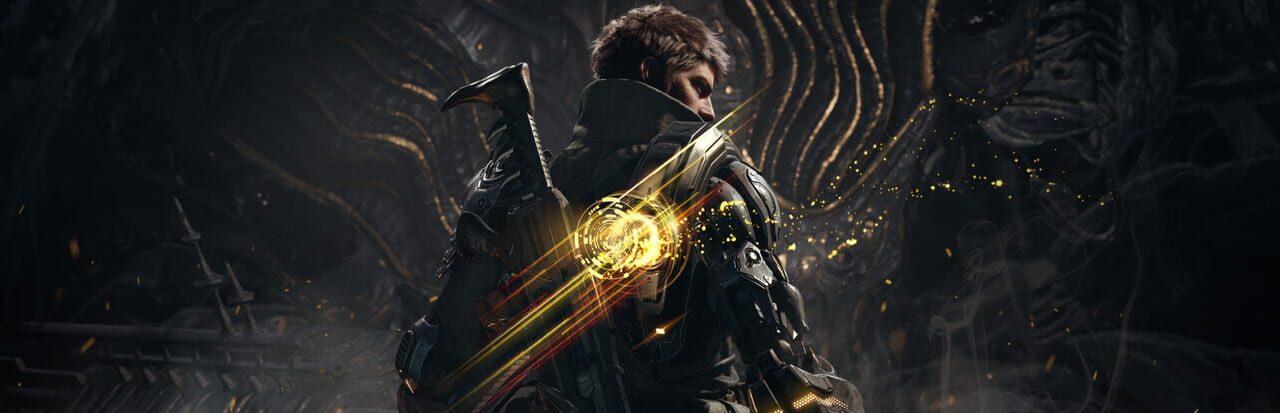
▲ Official Artwork (Source: IGDB)
Why Simple Updates Won’t Save the Meta
The core problem with The First Descendant lies in its identity as a looter-shooter that prioritizes aesthetics over mechanical depth. While the inclusion of jiggle physics and high-fidelity character models garnered initial attention, they provided zero substance for the endgame experience. Players have reached the level cap only to find a vacuum of meaningful activity, leading many to label the title as a shallow experience that lacks the soul of its predecessors.
According to data from SteamDB, the decline has been steady and sharp. To stop the bleed, the developers would need to rethink how abilities interact, how loot is distributed, and how the world evolves. A simple balance patch or a new character skin won’t address the fact that the mission structures are repetitive and the social systems are nearly non-existent. The community is demanding a reason to stay, and so far, the game has only given them reasons to leave.
The Problem of the Looter-Shooter Grind
In the current meta, players expect a sense of power progression that feels earned and impactful. In its current state, the game feels like it is fighting against the player, utilizing predatory drop rates and tedious loops to artificially extend playtime. This design philosophy has backfired, as the modern gamer is more likely to drop a game entirely than to engage with a grind that feels disrespectful of their schedule. Structural changes would mean re-evaluating the economy from the ground up.
Looking back at impressions from 2024, critics already warned that the game felt like a budget version of established titans. Without a unique mechanical hook to call its own, it has struggled to carve out a niche. If the developers cannot implement the structural changes mentioned by the CEO, the title risks becoming a cautionary tale for the industry on how not to manage a live-service launch.
Pulse Gaming Perspective: The First Descendant requires a Realm Reborn style miracle
The admission that patches can’t fix the game is a massive red flag for current players. It suggests that the very DNA of the game’s progression is broken, and unless Nexon is willing to commit to a total mechanical reboot, the player count will likely continue its slide toward zero. Gamers should be cautious about investing more time or money into a system that the developers themselves have labeled as failing.
As we move further into 2026, the future remains uncertain for those still dedicated to the grind. The industry has seen games come back from the brink before, but it requires a level of transparency and radical change that is rare in the current market. Read more on Pulse Gaming to stay updated on whether these structural changes actually materialize or if the servers will eventually go quiet.
Final Pulse Score: 4.5 / 10