
RollerCoaster Tycoon 2 players have spent decades pushing the boundaries of what is possible within Chris Sawyer’s iconic simulation engine, but a new milestone has been reached that defies conventional comprehension. Long-time community expert Marcel Vos has unveiled his latest creation, the Googol Coaster, a ride so gargantuan in its temporal scale that the age of the universe looks like a blink of an eye in comparison. This project represents the pinnacle of RollerCoaster Tycoon 2 engineering, utilizing vanilla game mechanics to create a ride that lasts for an unfathomable 1.947 x 10^227 years.
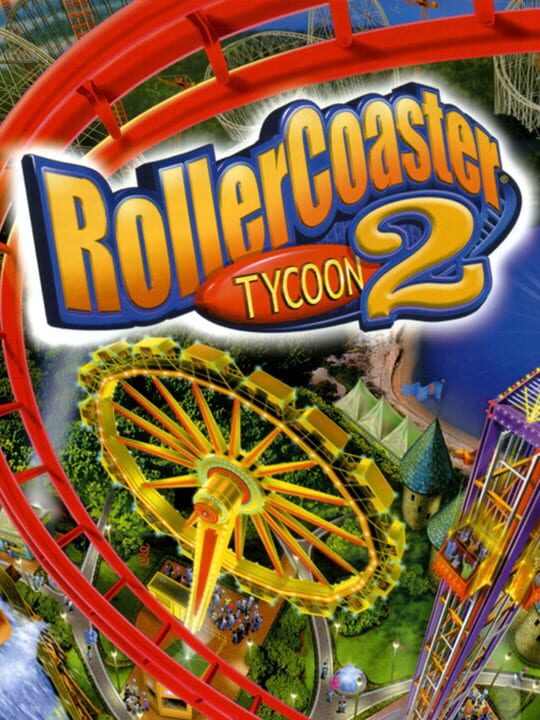
▲ Official Cover Art (Source: IGDB)
| Feature | Statistic / Detail |
|---|---|
| Game Title | RollerCoaster Tycoon 2 |
| Project Creator | Marcel Vos |
| Ride Duration | 1.947 x 10^227 Years |
| Game Engine | Vanilla (No Mods) |
The Architecture of the RollerCoaster Tycoon 2 Googol Coaster
The technical brilliance of this build lies in its modularity and its adherence to the strict constraints of the original RollerCoaster Tycoon 2 code. Vos constructed a series of 100 “super modules,” each designed to act as a temporal multiplier. By synchronizing these modules, every segment delays the coaster’s progress by a factor of 174. The visual result is a park so densely packed with track and machinery that it resembles a high-end motherboard or a semiconductor chip rather than a theme park. This isn’t just aesthetic; every square inch of the maximum park size is utilized to ensure the math reaches its maximum potential.
[[IMAGE_PLACE_HOLDER_2]]
Mastering Guest Manipulation and AI Psychology
While the track design is a feat of mathematics, the true genius—and perhaps the most “darkly humorous” aspect—is how Vos manages the human element. In RollerCoaster Tycoon 2, guests are typically chaotic variables that can ruin a park’s efficiency. To combat this, Vos has engineered a system that strips away guest agency entirely. By manipulating stats like nausea tolerance and energy levels, he forces guests to follow paths timed to the second. They are funneled into specific rides only when the system requires them to be there, ensuring the cycle never breaks.
To keep the guests from leaving or collapsing, Vos implemented a brilliant energy recovery loop. Since guests in RollerCoaster Tycoon 2 are programmed to sit if they have food or drink and a bench is nearby, he placed toffee apple stalls adjacent to seating areas. This forces the digital “victims” to recover just enough energy and happiness to continue their eternal transit. It is a closed-loop system of survival where the guests are no longer customers, but vital gears in a machine that will outlast the stars themselves.
The community’s reaction to the Googol Coaster has been a mix of awe and existential dread. Many have noted that the ride effectively turns the guests into a biological component of a computer. One viewer accurately described it as the “ultimate dehumanizing coaster,” where the only moment of true human agency occurs at the very end of the line—when the carriage inevitably flies off the track and explodes, finally releasing the guests from their 10^227-year contract.
Pulse Gaming Perspective: RollerCoaster Tycoon 2 as a Digital Purgatory
Marcel Vos has transitioned from a gamer to a digital deity, proving that simulation limits are merely suggestions for the determined. This build highlights the terrifying depth of the original game’s mechanics, showing how 24-year-old code can still be manipulated to create something that surpasses human comprehension. It is the definitive proof that the RCT community remains the most dedicated—and perhaps the most calculating—in gaming history.
For those looking to dive deeper into the technical nuances of the simulation, you can check out the full breakdown on IGN’s original report. Understanding how these super-modules interact provides a masterclass in logic gate design within a gaming environment. Whether you view this as a masterpiece of engineering or a digital nightmare, it is undeniably the most significant achievement in the history of the franchise.
Read more on Pulse Gaming for the latest deep dives into classic simulation titles and community breakthroughs.
Final Pulse Score: 10 / 10